

The amethyst isn’t just another purple stone. It’s been worn by pharaohs, prized by bishops, and quietly passed down as a talisman of clarity and calm. For thousands of years, people have believed amethyst holds real spiritual power—an energy you can feel the first time you hold it. But why this gem, and why do its meanings hold up in modern life and in jewellery boxes everywhere? Let’s cut through the myths and surface the deeper truth of amethyst’s spiritual significance and its enduring place in the world of jewellery.
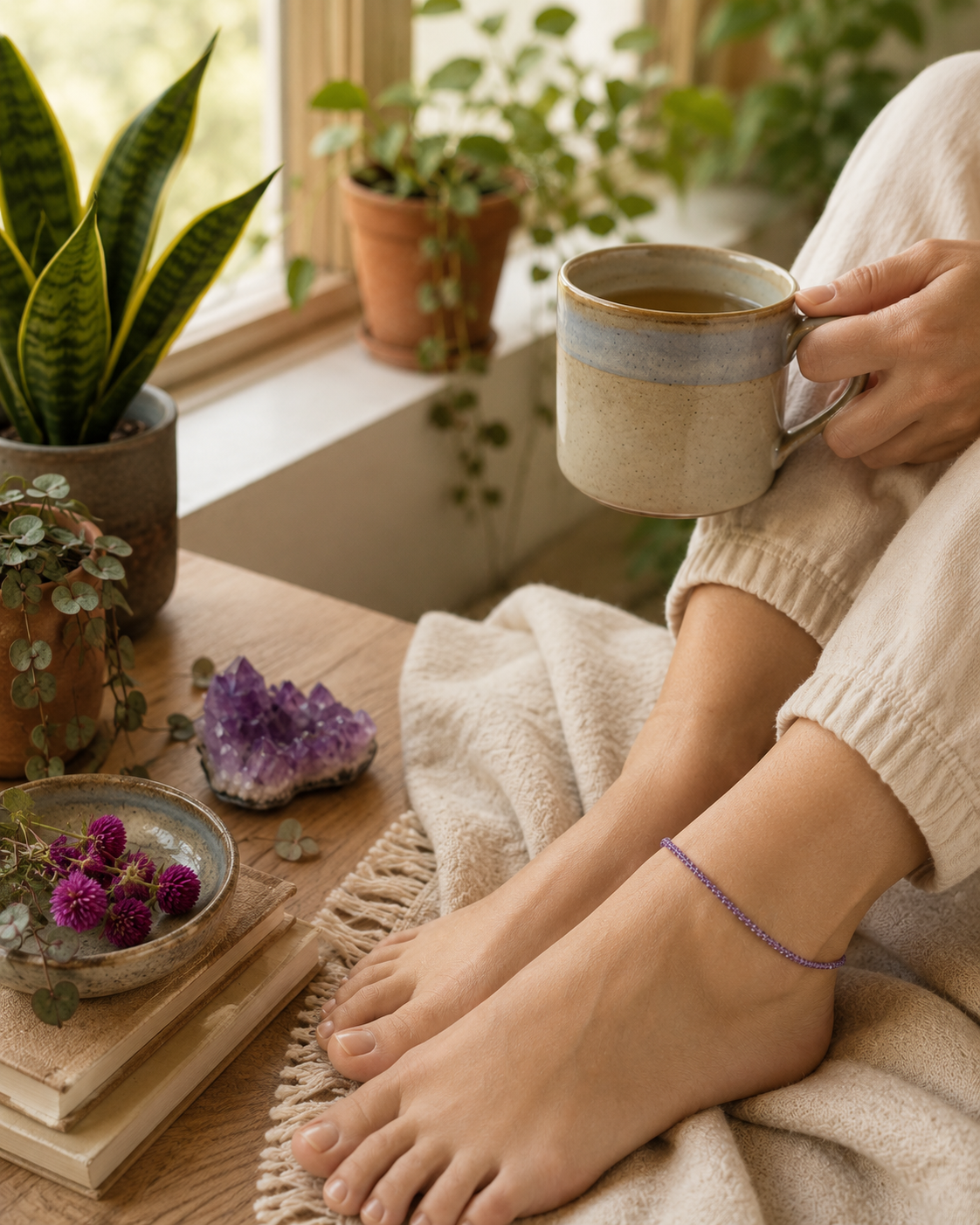
Amara Amethyst Anklet
Why Amethyst’s Symbolism Has Outlasted All the Trends
The power of amethyst endures because its symbolism fits the human experience at nearly every stage. When you study the history, it’s clear: amethyst’s meaning isn’t locked in the past. It’s grown with us.
Historically, amethyst was linked to clarity and protection. Ancient Greeks believed it could guard wearers against drunkenness and excess. Medieval European soldiers wore it for courage in battle, and church leaders used it as a symbol of purity and wisdom. Today, those meanings morph easily into spiritual properties: amethyst is seen as a stone that clears away confusion, calms the mind, and keeps us grounded when the world spins too fast.
Amethyst's power came not just from what people saw, but from what they needed: balance, peace, and protection from their own worst decisions.
Amethyst’s ability to anchor these universal needs is the reason it shows up in everything from meditation rooms to contemporary fine jewellery.
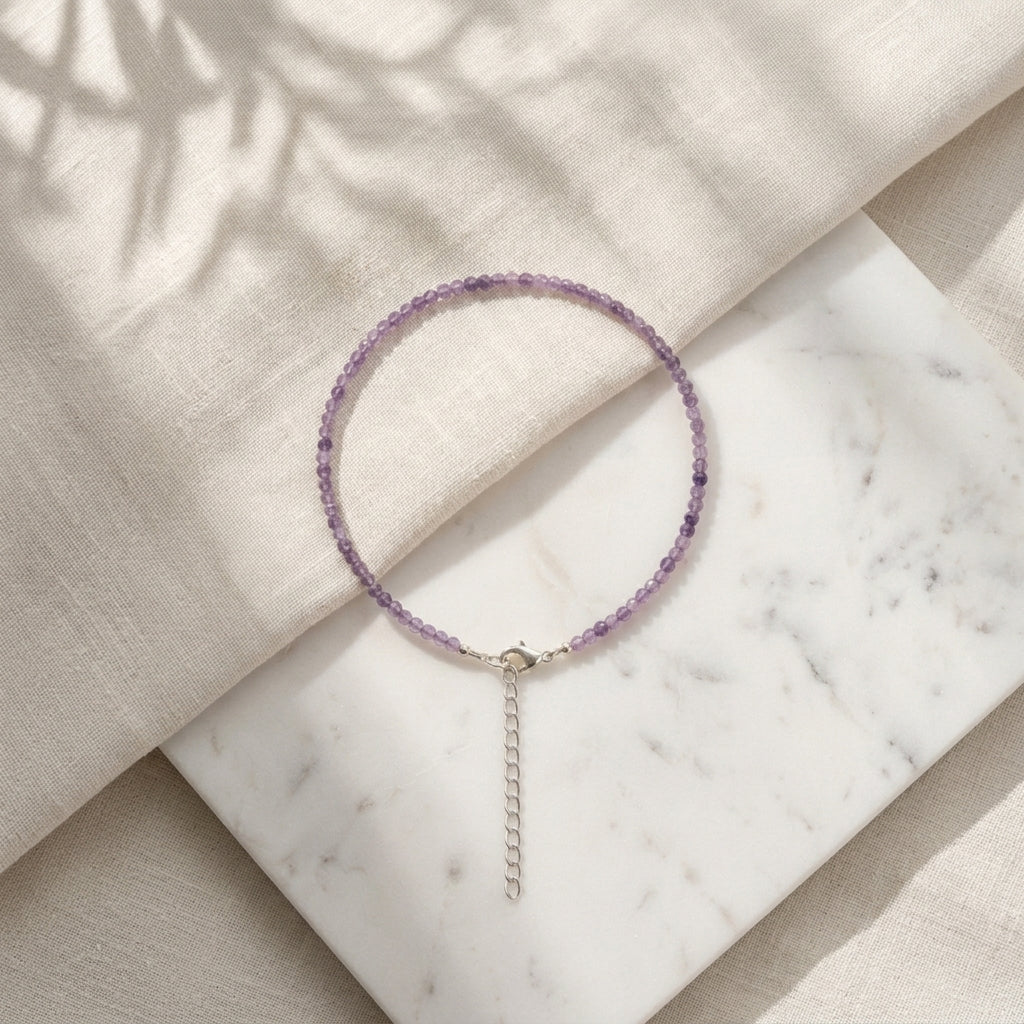
The Spiritual Properties of Amethyst: Beyond the Basics
Not all crystals get spiritual street cred. Amethyst does. The stone is tied to a handful of specific spiritual benefits—claims echoed across cultures and centuries, refined (but not replaced) by today’s holistic and wellness communities.
Amethyst’s Core Spiritual Meanings
- Clarity of thought: Cleansing the mind of negative thoughts and confusion
- Calm and emotional balance: Easing stress, restlessness, and anxiety
- Spiritual connection: Facilitating a deeper link with consciousness, the “higher self,” and deeper wisdom
- Grounding protection: Shielding the wearer against negative energies or unhealthy urges
When you dig into energy work and modern crystal healing, amethyst is always there—sometimes as a companion stone, sometimes the centerpiece. It’s most often associated with the third eye chakra (intuition, insight) and the crown chakra (connection to spirit). The thinking: meditation with amethyst can help “open” these centers, making it easier to hear your intuition and feel at peace.
How People Use Amethyst for Its Spiritual Properties
- Meditation tool: Holding or placing amethyst nearby to deepen focus and awareness
- Chakra balancing: Placing the stone on the third eye or crown during energy work
- Sleep aid: Putting amethyst under a pillow or by the bed for restful sleep and dream clarity
- Everyday talisman: Wearing amethyst jewellery as a low-key anchor for calm and balance throughout the day
Amethyst can become part of a larger ritual, or simply a kind of physical “reset button” when stress rises.
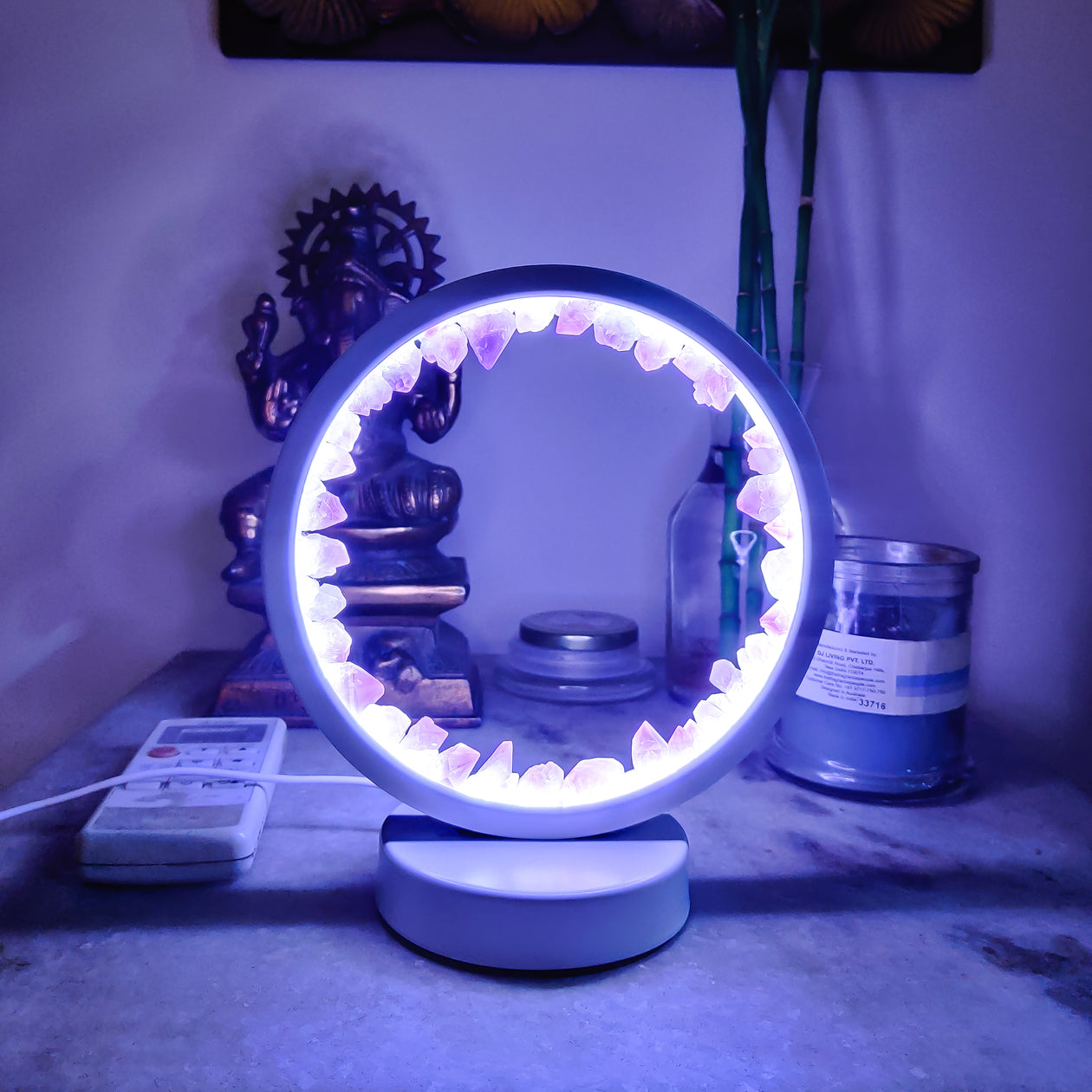
Aesthetic Amethyst Crystal Lamp
How Amethyst Became a Spiritual Staple in Jewellery
Long before wellness circles started talking about chakras, amethyst had a place in the world’s most coveted treasures. Its royal purple was reserved for rulers and religious leaders, signifying not just luxury, but virtue and spiritual authority.
Even as styles have changed, amethyst remains a favorite. And its spiritual properties are often the reason.
Why People Choose Amethyst for Spiritual Jewellery
- Color with a Message: Its rich, clear purple has always been associated with nobility, depth, and tranquility—not just fashion.
- Wearable Energy: Whether worn as a pendant, ring, or bead bracelet, amethyst keeps its “energy” close. This is especially important for believers in crystal healing, who want their stones in regular contact with the skin.
- Accessible Beauty: Unlike some precious stones, amethyst is relatively abundant and affordable. This means its spiritual benefits aren’t reserved for the elite.
In our experience, amethyst necklaces and earrings aren’t just chosen for beauty—they’re chosen for the calm and confidence the wearer wants to project. Jewellery becomes a personal ritual.

Historical Significance: From Gods to Commoners
Amethyst’s story cuts across nearly every civilization that prized beauty and symbolism. And, unlike opaque crystals like jade or turquoise, amethyst’s transparency made it a favorite for both decorative and spiritual purposes.
Key Historical Moments
| Period | Use / Symbolism | Who Used It |
|---|---|---|
| Ancient Egypt | Seen as protection in the afterlife, often buried in tombs | Royalty and priests |
| Ancient Greece | Worn to prevent drunkenness and maintain clarity | Elite and religious figures |
| Medieval Europe | Embedded in bishops' rings, linked to humility and wisdom | Clergy, royalty |
| Renaissance | Used to decorate regalia, link to virtue | Nobility |
| 19th–20th c. | Set in Art Nouveau and Victorian jewellery, with romantic or mystical symbolism | Middle and upper classes |
The most enduring root of the name ties back to its Greek origin: "amethystos" means "not drunk". This points to a belief system where a stone could help people avoid overindulgence and stick to their best intentions.
Myths & Legends: Stories That Shaped the Stone’s Meaning
One reason amethyst’s meanings have lasted is the power of its stories. The legends around the stone aren’t just entertaining—they offer a framework for why amethyst is treated as a spiritual tool today.
The Best-Known Myths
- Greek Mythology: Dionysus, god of wine, is said to have created the stone when he tried to punish a maiden, Amethystos. She was turned into crystal, then colored purple by Dionysus' wine, making the stone a symbol against drunkenness and excess.
- Early Christian Symbolism: Amethyst represented spiritual wisdom and piety, gracing bishops’ rings as protection against impure thoughts.
- Talismanic Use: Across Rome and medieval Europe, amethyst was set into charms and rings to protect soldiers in battle, promote mental composure, and encourage faithful love.
Every culture that adopted amethyst found new meaning within it, but the theme stayed the same: clarity, protection, and connection to something greater than the self.
Healing Claims: What Amethyst Can (and Can’t) Do
There’s no shortage of claims about amethyst’s healing potential. The mainstream takes these claims with healthy skepticism, but within spiritual and holistic circles, amethyst is considered one of the most effective crystals for everyday self-care.
Spiritual and Emotional Healing
- Stress relief: Many users report feeling calmer and more centered after meditating with or carrying amethyst.
- Emotional balance: The stone is said to stabilize mood swings and sharpen emotional intelligence.
- Sleep and dreams: Some people place amethyst under their pillow or on a nightstand to encourage restful sleep and vivid, positive dreams.
- Aid for decision making: The “clear mind” aspect ties into better judgment, less impulsiveness, and easier problem-solving.
Physical Healing: Traditional Versus Scientific Perspective
While claims about amethyst’s ability to detoxify the body or cure specific ailments are unproven by science, the crystal’s association with restful sleep and stress reduction can have a measurable impact on well-being. At the very least, amethyst serves as a concrete reminder to slow down, breathe, and refocus—something most of us can use.
| Claim Area | Evidence | Our Take |
|---|---|---|
| Stress reduction | Anecdotal | Makes sense as a ritual, not a replacement for therapy |
| Physical healing | Unproven | No scientific support for direct effects |
| Improved sleep | User reports | Could help as part of a calming night routine |
| Spiritual insight | Spiritual belief | Value depends on individual experience |
Amethyst’s Place in Modern Spirituality and Wellness
In 2026, amethyst is nearly everywhere—chiropodist offices, yoga studios, tech employees’ desks, even school classrooms. Its universal symbolism fits today’s values: balance, mindfulness, and well-being, regardless of religious or cultural background.
How Amethyst is Used Now
- Meditation spaces: Point clusters or geodes placed in feng shui corners for tranquility.
- Yoga and mindfulness: Incorporated into mala beads or set at the top of a yoga mat for intention-setting.
- Work environments: As a “focus stone” on desks to combat digital distraction and burnout.
We see a distinct shift—from amethyst as "magical protection" to amethyst as a physical totem for new self-care rituals.
Amethyst and the Chakras: Not Just New Age Marketing
Crystals and chakras are deeply interconnected in modern metaphysical thought. Amethyst stands out for its link to the third eye (the center of intuition and insight) and the crown (spiritual connectivity).
Chakra Alignment Chart
| Chakra | Location | Focus | How Amethyst Is Used |
|---|---|---|---|
| Third Eye | Forehead | Intuition, Perception | Placed on forehead during meditation |
| Crown | Top of head | Spiritual awareness | Kept nearby to “open” spiritual channels |
The amethyst’s purple hue is thought to align perfectly with these chakras’ energy frequencies. While the science is anecdotal, practitioners swear by the results, especially for focus, creativity, and easing “monkey mind” distractions.
Amethyst in Jewellery: Color, Setting, and Symbolism
Jewellery is where amethyst’s power meets everyday life. There’s a reason the oldest and newest collections both reach for this stone.
Why Amethyst Remains a First Choice for Spiritual Jewellery
- Unmatched hue: Its color varies—from the softest lilac to deep, royal purple—while staying instantly recognizable.
- Design versatility: Amethyst fits everything: simple silver prongs, bold statement settings, delicate beadwork.
- Personal ritual: Wearing the stone lets the wearer keep spiritual reminders close, making intention part of their outfit.
Most Popular Amethyst Jewellery Types
| Jewellery Type | Typical Setting | Spiritual Use |
|---|---|---|
| Pendant necklaces | Silver, gold, wire-wrapped | Keeping amethyst near the heart or throat centers |
| Bead bracelets | Single or mixed stone beads | Everyday energy, tactile mindfulness tool |
| Stud earrings | Minimal prong or bezel | Quiet reminder of intention and focus |
| Rings | Solitaire, cluster, cabochon | Channeling energy through the hands |
We see amethyst featured in both classic vintage designs and sleek, modern minimalist settings—proof that its mix of meaning and beauty never falls out of favor.

Varieties of Amethyst: Not All Purples Are Equal
Not all amethyst is the same, and this matters for both spiritual and aesthetic uses.
Main Types of Amethyst
| Type | Color Range | Key Features | Common Use |
|---|---|---|---|
| Classic Amethyst | Pale to deep purple | Most common, most affordable | Jewellery, meditation, decor |
| Pink Amethyst | Pale pink-lavender | Newly popular, delicate | Soft energy work, feminine jewellery |
| Green “Prasiolite” | Mint to green-gray | Heat-treated or rare natural | Chakra work, trendy designs |
| Chevron Amethyst | Banded purple/white | Unique patterns | Energy work, statement pieces |
The most spiritually prized stones tend to be natural (not artificially heated) and show rich, balanced coloration. In our team’s work with clients, pink amethyst is a favorite for gentle, heart-centered clarity, while classic purple amethyst is chosen for stronger grounding and spiritual connection.

Amethyst Compared With Other Gemstones: What Sets It Apart
Competitor articles skip this, but it’s worth asking: how does amethyst stack up—spiritually and practically—against other stones commonly used in spiritual jewellery?
| Property | Amethyst | Rose Quartz | Citrine | Clear Quartz |
|---|---|---|---|---|
| Chakra Focus | Third eye, crown | Heart | Solar plexus | All chakras |
| Primary Energy | Clarity, calm, protection | Love, harmony | Manifestation, abundance | Amplification, clarity |
| Color | Purple | Pink | Yellow | Transparent |
| Accessibility | High | High | Moderate | Very high |
| Spiritual Use | Insight, peace | Emotional healing | Motivation, willpower | Energy clearing |
Why does this matter? If you’re looking for protection, mental calm, and spiritual “clear-headedness,” amethyst is far more targeted than most stones used in jewellery. It stands on a different part of the spectrum than the warmth of rose quartz or the bright motivation of citrine.
Geological Origins: What Makes Amethyst Unique, Physically
The stone’s power may be spiritual, but its physical formation is equally fascinating.
- Family ties: Amethyst is a member of the Quartz family, alongside citrine and rose quartz.
- Formation: It forms over thousands of years inside volcanic rocks, as iron impurities react with natural radiation.
- Colour spectrum: Varies from pale lilac to deep violet, sometimes with red and blue flashes, depending on the location and trace elements.
- Hardness: Amethyst rates 7 on the Mohs scale, making it durable enough for daily wear.
The depth of color doesn’t just affect the price—it’s central to amethyst’s spiritual and aesthetic value in jewellery.

Care and Maintenance
Spiritual tools only serve you if they’re well cared for. Amethyst is durable, but not invincible.
How to Care for Amethyst Jewellery
- Cleaning: Use warm, soapy water and a soft cloth—avoid ultrasonic cleaners and harsh chemicals that can damage color.
- Avoid excessive sun: Prolonged exposure to sunlight can fade the stone’s rich color.
- Store separately: Amethyst is tough, but can still be scratched by harder stones. Store in a soft pouch or separate compartment.
- Energetic cleansing: For those who use amethyst for its spiritual properties, regular “recharging” is common—by placing the stone in moonlight, using smoke (such as sage), or pairing with clear quartz.
Just as with any ritual object, regular care keeps both appearance and “energy” clear.

Ethical Sourcing and the Future of Amethyst Jewellery
This is where the conversation is shifting fastest.
Until recently, few consumers thought about where crystals came from. But as demand for spiritual jewellery has surged, so have concerns about mining’s social and environmental costs.
Responsible amethyst comes from mines with clear labor and environmental standards (Brazil being the leading producer, with a spectrum of practices). As a team, we believe transparent sourcing is now part of the stone’s spiritual integrity.
Questions to Ask When Buying Amethyst Jewellery
- Does the retailer provide origin information?
- Are there third-party certifications for ethical mining practices?
- Is the amethyst natural or treated? (Heat-treated stones are less rare, but not harmful)
A spiritual stone loses some of its magic if it comes at the expense of the earth or its people. The modern buyer has the power—and, perhaps, the responsibility—to insist on better.

How to Use Amethyst In Daily Rituals
Beyond claims and history, it’s the daily practice that cements meaning. We’ve worked with users who incorporate amethyst into routines for vastly different reasons, but all find it a concrete bridge between intention and action.
Examples from Amethyst Wearers
- A meditation teacher wears an amethyst pendant during evening classes, as a focus point and as a visible prompt for calm.
- A software developer keeps a raw amethyst cluster on their desk as both a visual break and a small reminder to stay present amid digital confusion.
- A couple purchases matching amethyst rings for their sixth wedding anniversary, a nod to the stone’s official anniversary status, but also as a joint symbol of balance and mindful connection.
Whether woven into formal ritual, or just worn for the beauty, it’s the regular interaction that transforms amethyst from “just a crystal” into a lived spiritual touchstone.
Birthstone and Zodiac Significance: The February Connection
Amethyst’s prominence isn’t just aesthetic or spiritual—it’s deeply woven into modern traditions.
- February birthstone: Amethyst is the official birthstone for February, often given as a gift to symbolize personal clarity and peaceful intentions.
- Zodiac: Traditionally associated with the sign Pisces; some also link it to Aquarius.
- Anniversary stone: Recognized as the gemstone for the 6th wedding anniversary.
| Tradition | Meaning / Association |
|---|---|
| February birthstone | Clarity, personal transformation |
| Pisces zodiac | Calm, creative, romantic, intuition |
| 6th anniversary | Lasting harmony, joint growth |
How Amethyst’s Meaning Changes Over Time (and Why That Matters)
Every generation finds its own relationship to amethyst. For our team, one interesting thread is watching how contemporary wearers reinterpret “ancient meanings” for modern concerns.
- Where greeks sought protection from wild excess, today’s user seeks protection from overwhelm and burnout.
- Medieval bishops prized spiritual insight; now, mindfulness practitioners look for that same clarity in daily rituals.
- Where old amulets were meant to deflect literal poison, today’s wearer uses amethyst as a reminder to curb digital “toxins” and stay present.
This adaptive quality is what keeps amethyst relevant. Unlike trend-driven or novelty stones, amethyst holds on because its core promise—clarity, balance, and peace—is always needed.
Amethyst: The Takeaway for the Spiritually Minded Jewellery Lover
Amethyst’s real meaning is how it straddles two worlds: it’s both a luxury object and a spiritual tool. Its enduring role in jewellery isn’t just about color or cost. It’s about the layer of meaning it brings to the act of getting dressed, gifting a loved one, or creating a sacred space.
Whether you’re drawn in by the color, the stories, or the feeling you get when you wear it, amethyst’s place is—by design—timeless. And that’s what makes every new piece not just a trend, but a personal tradition.
Frequently Asked Questions
Q: What are the spiritual properties of amethyst?
A: Amethyst is believed to promote clarity of thought, calm emotional balance, facilitate spiritual connection, and provide grounding protection against negative energies.
Q: How can I use amethyst for meditation?
A: You can use amethyst during meditation by holding it in your hand or placing it nearby to deepen focus and enhance awareness.
Q: Why is amethyst a popular choice for spiritual jewellery?
A: Amethyst is favored for spiritual jewellery due to its rich color, perceived energy benefits, and accessibility, making its spiritual properties available to a wider audience.
Q: What is the significance of amethyst in different cultures?
A: Amethyst has been valued across cultures for its protective and purifying qualities, historically linked to royalty, religious leaders, and warriors for its symbolism of clarity and wisdom.
Q: How does amethyst compare to other gemstones in terms of spiritual use?
A: Amethyst is specifically associated with clarity, calm, and protection, making it more targeted for these purposes compared to other stones like rose quartz or citrine, which focus on love and motivation.
Q: Can amethyst help with sleep and dreams?
A: Many users report that placing amethyst under their pillow or on a nightstand can encourage restful sleep and promote vivid, positive dreams.
Q: What are the different types of amethyst and their uses?
A: Types of amethyst include classic amethyst, pink amethyst, green prasiolite, and chevron amethyst, each used for various spiritual and aesthetic purposes based on their unique properties.
Q: How should I care for my amethyst jewellery?
A: To care for amethyst jewellery, clean it with warm, soapy water, avoid excessive sunlight, store it separately from harder stones, and regularly recharge its energy through methods like moonlight exposure.


