

It’s easy to think of luxury jewellery as static—locked in vaults, kept for rare occasions, or bought only to impress. The Ambani family turns that idea on its head.
For them, jewels aren’t just about cost or spectacle. They are active parts of family life, rich with memory, history, and style that moves from generation to generation right in the open—on red carpets, at weddings, and in front of millions.
When Nita Ambani, Isha Ambani, or Radhika Merchant appear draped in emeralds and diamonds, what you see is less about showing off, more about showing where they come from, and who they share these stories with.
/elle-india/media/media_files/2026/04/27/3-2026-04-27-12-28-55.png)
How Jewellery is the Ambani Family Code
The Ambani women don’t simply wear dazzling pieces—they create a certain language with their jewellery. The pattern is clear when you look at public appearances over the last decade. Emerald beads move from Nita Ambani’s neck to Isha’s, sometimes with Shloka Mehta echoing the palate in her own way. Golconda diamonds, once an emblem of Indian royalty, are reintroduced on Radhika Merchant’s head and ears, never losing their historic glow. The key is repetition and sharing: pieces resurface, styles connect one generation to the next, and even big-ticket gems feel surprisingly lived-in instead of untouched or intimidating.
The Power of Heirloom Jewellery
For most high-profile families, heirlooms tend to be rare glimpses—displayed only when tradition demands, or tucked away as investments. The Ambanis do something else. Their heirlooms are always in play. The same emerald necklace may be seen on multiple members at different events:
- Emerald strands passed from Nita to Isha and Shloka, styled anew each time
- Polki and kundan pieces redesigned over the years, but always rooted in traditional Indian craftsmanship
- Family mangtikas or earrings paired with both sari and Western outfits, signalling adaptability
This isn’t nostalgia for its own sake. It demonstrates how luxury pieces take on personal meaning with each new wearer, and traditions evolve as families grow.

Nita Ambani’s Iconic Emeralds: Worth, Weight, and Message
No piece in the Ambani family vault is more talked about than Nita Ambani’s emerald necklaces. The numbers are eye-watering—a necklace featuring a 560-carat emerald is valued at an estimated ₹500 crore (around $60 million), according to Robb Report India.
| Neckpiece | Estimated Worth | Notable Details |
|---|---|---|
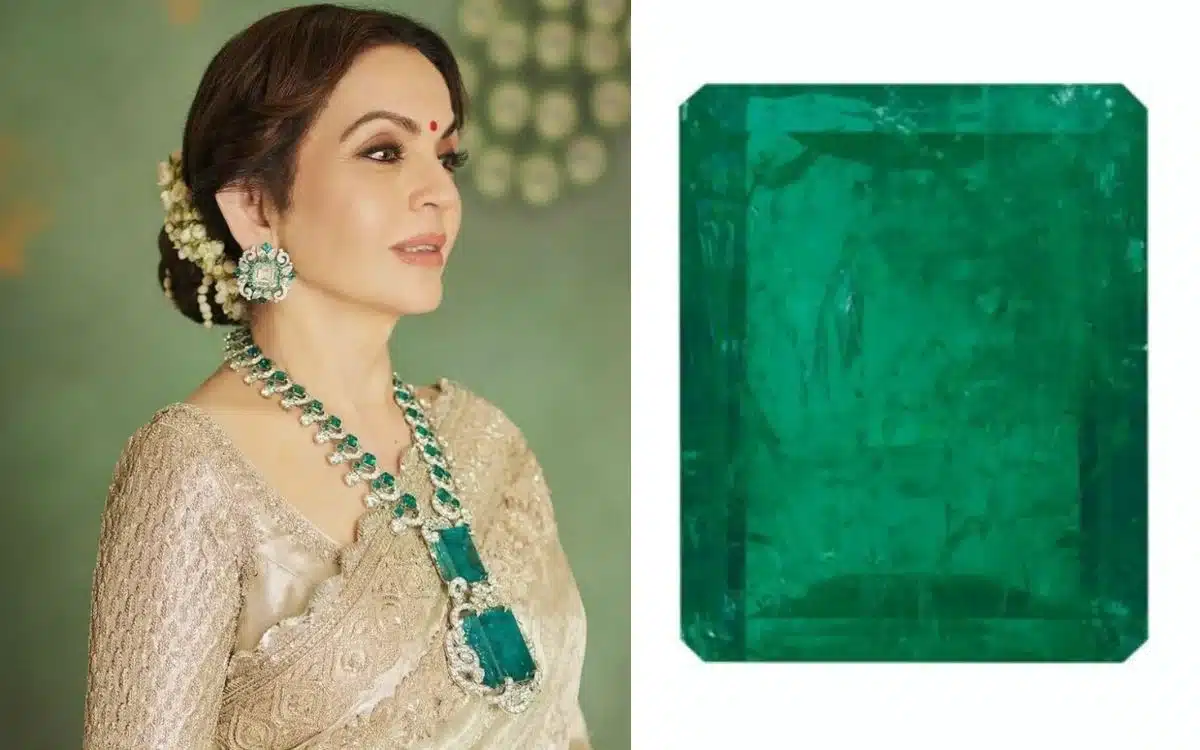
| Emerald 'brick' | ₹40-50 crore | Two colossal emerald slabs in raw, natural form |
| Garden of Love | Not disclosed | Took 4000 hours to create |
| Diamond-emerald set | Not publicly known | Features high-clarity stones, traditional polki work |
What makes these headline pieces special isn’t just the carat size. The emerald ‘brick’, for example, is set in a way that keeps the stone’s natural shape—rare in an era obsessed with symmetry and uniformity. The emphasis is on uniqueness, tradition, and the story behind the stones.
- Emeralds as family signature: The choice of emeralds links the Ambani story to the historical rulers of India, for whom these gems were symbols of status and spiritual protection.
- Repeated motifs: The same pieces reappear at family events, sometimes slightly reworked but always recognizable—a signal that style in this family is about continuity, not passing trends.
 .
.
How Isha Ambani and Shloka Mehta Redefine "Borrowing from Mom"
Walk the red carpet or wedding mandap, and you might see Isha Ambani or Shloka Mehta in emerald diamond stacks that look familiar. That’s because, according to Natural Diamonds, Isha’s diamond collection frequently includes pieces borrowed from her mother’s own vault. This isn’t a simple case of daughters raiding their mother’s jewellery box—it’s a deliberate reference, a visual statement about unity, legacy, and shared personal history.
Think of it like a signature that’s recognizable, but every “signing” is slightly new. For Isha, this might mean:
- Using heirloom diamond earrings with a modern gown
- Stacking traditional emerald necklaces for a layered look
- Combining antique kundan with fresh stones for contrast
For Shloka Mehta, the pattern continues:
- Selection of pieces that echo what Isha or Nita wore—but restyled for her own taste
- Mixing old and new: blending family jewels with contemporary designers or custom pieces
This layered approach reflects how style and family legacy can coexist without becoming rigid or predictable.
Designers, Artisans, and the Invisible Hands Behind the Glamour
Each Ambani jewel is the end product of countless hours of craftsmanship. The “Garden of Love” necklace, worn by Nita Ambani, reportedly took 4000 hours to create. Designers like Kantilal Chhotalal have crafted showstoppers for the family, alongside contemporary jewellers specializing in polki and kundan techniques.

Key Techniques and Materials
| Technique | Description | Common in Ambani Collection? |
|---|---|---|
| Polki | Uncut diamonds set in gold, maximizing natural texture and light | Yes |
| Kundan | Gemstones set in pure gold foil for intricate patterns | Yes |
| Golconda Diamonds | Exceptionally pure, historical Indian stones | Yes—see Radhika Merchant |
The emphasis on such traditional methods bridges Indian heritage and modern luxury. For the Ambanis, high-value stones aren’t just about market price—they’re about preserving artistry.
"When Radhika Merchant wears a Golconda diamond, it isn’t just an accessory, it’s a rite of passage—signalling entry into a legacy both rare and alive."
Family Jewels as a Shared Visual Language
There’s a temptation to see each necklace or earring as a stand-alone statement. The Ambani approach is different: their jewellery is part of a system, a recognisable language within the family’s public appearances. It’s not just about one-off showpieces.
Examples:
- Consistent silhouettes: Mangtikas, chandelier earrings, and multi-layered necklaces often mirror each other in shape and size across family members
- Motifs and patterns: Floral patterns, geometric symmetry, and heritage settings repeat, making even new commissions feel like part of a single, shared story
| Style Element | Nita Ambani | Isha Ambani | Shloka Mehta | Radhika Merchant |
|---|---|---|---|---|
| Emerald beads | ✓ | ✓ | ✓ | |
| Polki settings | ✓ | ✓ | ✓ | ✓ |
| Golconda diamonds | ✓ | |||
| Mangtikas | ✓ | ✓ | ✓ |
This shared language turns what could have been solo statements into a kind of formal family code—one the public comes to recognize at each big event.
Where Fashion Trends Meet Heritage: Adapting the Old for the Present
The Ambani approach to jewellery isn’t stuck in the past. Rather than keeping heirlooms exactly as they are, the family is known for:
- Restyling heritage pieces to fit current silhouettes—sari, gown, or fusion wear
- Mixing contemporary and traditional pieces in a single outfit
- Adjusting the length or stack of necklaces depending on the neckline and event
For example, what worked for a traditional wedding saree is reimagined for a Western red carpet appearance. Ambani stylists routinely collaborate with both classic jewel houses and contemporary Indian designers to keep the look current but rooted.
"The Ambani legacy isn’t about preserving jewellery in amber; it’s about evolving it, live, in public view."
Impact on Wider Indian Jewellery Trends
According to industry watchers, this practice has begun to shape broader luxury jewellery habits in India:
- Rise of heirloom-inspired designs in popular bridal collections
- More women seeking custom adjustments to inherited family jewellery
- Younger buyers showing interest in traditional stones and classic settings—less focused on fleeting trends

Filling a Gap: The Untold Histories Behind Specific Pieces
One thing most write-ups skip: the actual backstory of certain Ambani jewels. Where did the slabs of emerald come from? How did these particular techniques arrive in the family collection? A few clues can be pieced together from recent interviews and auction records:
The Journey of the Golconda Diamond
Golconda diamonds, named after the historic Indian mines near Hyderabad, carry a reputation for purity, colorlessness, and a nearly mythical past. Traditionally, these stones adorned Mughal emperors and Nizam royalty. Today, a Golconda diamond appears in the Ambani family’s collection, worn by Radhika Merchant.
- Stone provenance: Many of these diamonds trace back centuries, sometimes appearing in auction records before making their way into modern settings
- Setting evolution: Old table-cut stones are often reset with softer edges for wearability, showing how history adapts in the hands of new owners
The Emerald “Brick” Necklace
This piece, estimated between Rs 400-500 million, consists of two massive emerald slabs that remain close to their raw, mined shape. This decision—eschewing heavy faceting for natural lines—connects the necklace with ancient Indian aesthetics, where raw stone was seen as a sign of both power and purity.
"The necklace feels rooted in time, but it lives as much in 2026 as it did in the 18th century."
The Garden of Love
While less is known about the personal history of this necklace, the craftsmanship—requiring 4000 hours—evokes a kind of devotion rarely seen except in the most important royal commissions of the past.
Why This Approach to Legacy Resonates Now
Jewellery meant purely for status is easy to ignore or even dislike. What fascinates people about the Ambani tradition is its combination of:
- Emotion and display—jewels tell a family story even in the limelight
- Adaptability and preservation—pieces are updated or styled differently based on who’s wearing them, or what the moment calls for
- Community focus—the grandest jewels aren’t reserved for one person, but circulate between Nita, Isha, Shloka, and Radhika
In a culture that often prizes individuality above all, the Ambanis model a kind of togetherness that feels refreshing—and a reminder that fashion, at its best, can connect rather than divide.
"In the Ambani family, jewellery isn’t the endpoint of wealth—it’s the thread weaving public life and private story into one."
The Future: Could the Ambani Legacy Redefine Indian High Jewellery?
The possibility that this style of shared, living legacy could shape the next era of Indian jewellery isn't far-fetched. Already, major houses are launching heirloom revival lines, and younger celebrities openly reference their mothers’ and grandmothers’ gems.
Table: What Ambani Influence Looks Like in New Indian Jewellery (2026)
| Trend | The Ambani Approach | Wider Impact |
|---|---|---|
| Sharing jewellery | Multiple wearers in one family | More open borrowing, even among friends |
| Heritage meets modern | Traditional stones in modern settings | Surge in custom recutting or restyling |
| Valuing provenance | Known story or source of each stone | Storytelling as core to marketing |
| Layers over single pieces | Mixed, repeated looks across occasions | More eclectic bridal/party styling |
Frequently Asked Questions
Q: How does the Ambani family use their jewellery differently than most high-profile families?
A: The Ambani family actively incorporates their jewellery into daily life and public appearances, making it a part of their family narrative rather than just a display of wealth.
Q: What is the significance of emeralds in the Ambani family's jewellery collection?
A: Emeralds serve as a family signature for the Ambanis, linking their story to historical Indian rulers and symbolizing both status and spiritual protection.
Q: How do Isha Ambani and Shloka Mehta reinterpret their mother's jewellery?
A: Isha and Shloka often borrow pieces from Nita Ambani’s collection, using them in modern contexts to create a visual statement about unity and shared family history.
Q: What role do traditional techniques play in the Ambani jewellery collection?
A: Traditional techniques like polki and kundan are integral to the Ambani collection, emphasizing the preservation of artistry and Indian heritage in their luxury pieces.
Q: How does the Ambani family adapt heirloom jewellery for contemporary fashion?
A: The Ambani family restyles heirloom pieces to fit modern silhouettes and mixes traditional and contemporary designs, ensuring their jewellery remains relevant and stylish.
Q: What impact has the Ambani family's approach to jewellery had on wider trends in India?
A: Their practice of sharing and restyling jewellery has inspired a rise in heirloom-inspired designs and increased interest among younger buyers in traditional stones and custom adjustments.
Q: What stories do specific pieces of Ambani jewellery tell?
A: Each piece, like the Golconda diamond or the emerald 'brick' necklace, carries a unique backstory that connects it to historical significance and personal family narratives.


