

It takes weeks to make what looks like a wisp of silver thread. In Cuttack, India, entire families have spent generations coaxing simple wires into jewellery that looks lighter than air but carries the weight of centuries.
Not many outside the region know that "Rupa Tarakashi" — silver filigree art — has been practiced here since the 12th century. What sets Indian filigree apart isn't just its breathtaking intricacy, but the way it connects craft, culture, and identity. Find out more in Amorella's curated guide about Filigree jewellery.

What Is Filigree Jewellery? The Art of Weaving Metal with Air
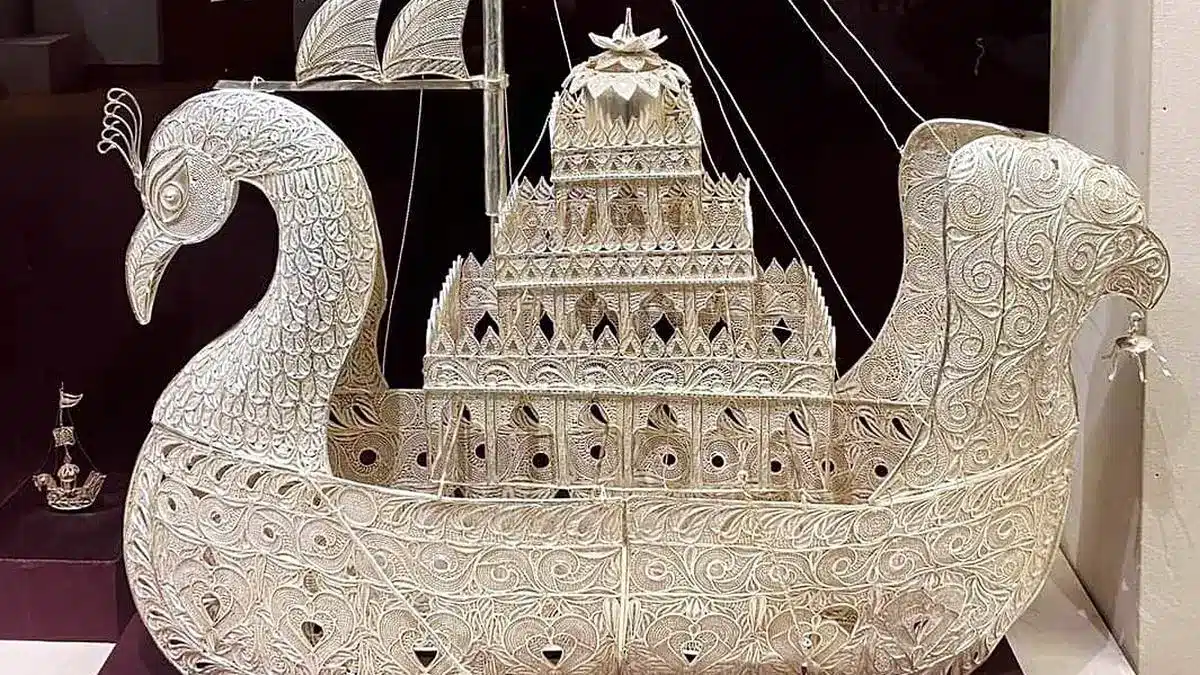
Filigree might look delicate, but its roots are sturdy. At its simplest, filigree jewellery is made by twisting and curling thin wires of precious metal — mostly silver, sometimes gold — and soldering them together to shape intricate designs. The patterns range from flowers and vines to geometric grids so fine they almost disappear against your skin.
Think of it like lace, but made with metal instead of thread. Each design builds from basic wire coils and twists into something altogether greater — a bracelet, a pendant, maybe an earring that seems too light to be real.
Filigree is jewellery that looks fragile but holds stories strong enough to last centuries.
Historically, filigree comes from the Latin filum (thread) and granum (grain), capturing both its technical foundation and its textured feel.
Key features of filigree jewellery:
- Made with thin wires, often less than 0.5 millimeter thick
- Patterns are hand-shaped — not cut from sheets or cast in molds
- Looks toward nature and geometry for motifs: leaves, flowers, latticework, paisleys
- Feels unusually light for its size
- Finished with burnishing or sometimes oxidizing for contrast
In India, the heartland of filigree is Cuttack, Odisha, though other centers produce distinct regional styles. Each place, each workshop, brings its own hand, tradition, and level of detail.

How Filigree Jewellery Is Made: Inside the Workshop
Filigree isn't made in a day, or even a week. According to Smith Jewels, creating a single intricate piece by hand can take several days or weeks, depending on its complexity. From basic material to finished art, every stage happens on a wooden bench, usually in the workshop (or home) of an artisan.
Here’s the process as it plays out in a classic Cuttack workshop:
- Wire Drawing: Raw gold or silver is melted and pulled — again and again — through progressively finer holes in a steel plate, until it becomes a wire as thin as a hair.
- Twisting & Coiling: Artisans twist these wires together or wind them around rods to create decorative coils and motifs.
- Shaping PatternsThe tiny wires are pinched, curved, and snipped into forms — petals, scrolls, trellises.
- SolderingEach wire or coil is joined at contact points using a soldering torch. This is painstaking: too much heat and the whole piece can collapse.
- PolishingAfter the structure is set, the piece is cleaned, burnished, and sometimes oxidized for depth.
This isn’t work for the impatient. A filigree artisan might spend hours just refining a single section until each curve is uniform. Simple mistakes can mean starting over.
Why Handmade Still Matters
Mass-produced machine "filigree" exists — but you can spot the difference. Handcrafted filigree is sharper, more sculpted, less perfect in a way that's intensely, intentionally human. Patterns might not be mathematically identical, but that's the proof of the maker’s hand.

The Unmatched Filigree of Cuttack: Rupa Tarakashi’s Legacy
Most Indian cities can point to a craft they're known for, but Cuttack's filigree is famous even by national standards. What sets Cuttack apart is the survival of traditional techniques, the purity of designs, and the city's obsession with silver as the medium.
"Cuttack, particularly known for its silver filigree, has been a prominent center for this craft since the Mughal era," according to Smith Jewels.
Cuttack Filigree at a Glance
| Feature | Cuttack, Odisha | Other Indian Centers |
|---|---|---|
| Local name | Rupa Tarakashi | None standardized |
| Main Metal | Silver (almost exclusively) | Silver, Gold, some Copper |
| Historic era | Since 12th-13th Century (GI tag) | Late medieval / modern |
| Typical Motifs | Peacocks, conch shells, flowers | Varies (Jaipur: geometric) |
| Signature Pieces | Crowns (for deities), necklaces, anklets | Brooches, earrings |
| Method | Hand-drawn wire, hand-soldered | Both hand & machine-made |
What is Rupa Tarakashi?
This phrase literally means "silver wirework." Rupa Tarakashi pieces have a distinctive look — more open space, high symmetry, and clear inspiration from temple art and local flora. The city’s work received the Geographical Indication (GI) tag, confirming its strong link to place and tradition.
How the Mughal Era Shaped It
Filigree in Cuttack isn’t ancient for no reason. During the Mughal period, rulers and nobility often commissioned fine metalwork for court jewellery and ceremonial gifts. Cuttack artisans, already skilled in silver, adapted techniques from Persian filigree and folded them into existing Indian methods. That cross-cultural blend is still visible today.
Filigree’s Spread: Other Regional Styles and Design Hubs
While Cuttack rightfully dominates the conversation, other centers across India have adapted filigree with their own touches. Here’s a quick guide to the most notable ones:
Comparing India’s Filigree Centers
| City / Region | Signature Metal | Design Focus | Historical Roots |
|---|---|---|---|
| Cuttack (Odisha) | Silver | Floral, religious symbols, fine lattice | 12th–13th century, GI tag |
| Karimnagar (Telangana) | Silver | Wide, bold patterns, floral and animal motifs | Known since 19th century |
| Jaipur (Rajasthan) | Gold & Silver | Fusion, geometric, sometimes enamel fill | Mughal and Rajput influences |
Highlights of Each Style
- Karimnagar: More robust structure, denser wire, and thick outlines. Patterns can be bolder, and objects range from jewellery to silver ornaments for temples and homes.
- Jaipur: Here, filigree often mixes with meenakari (colored enamel) and polki diamonds for a splashier, fusion look. Pieces can be vivid and more urban in feel.
Notably, though, Cuttack remains the only region where filigree work is almost exclusively the domain of silver.
The Motifs and Meaning: Symbolism in Filigree Design
Ask any Indian jeweller and they’ll say: motifs are never random. Every curve, flower, or bird shape follows a larger pattern of meaning.
Common design themes:
- Nature: Lotus flowers, peacocks, creepers — references to purity, beauty, and India’s landscape
- Hindu sacred symbols: Conch shells (shankha), the sun, temple domes
- Geometric patterns: Latticework (jali), grids, spirals — sometimes inspired by Mughal architecture
- Paisleys: A pan-Indian favorite, symbolizing fertility and growth
"Motifs in Indian filigree aren’t just decoration — they carry ideas about fortune, spirituality, and nature’s rhythms."
For special occasions, filigree pieces may be designed to include custom motifs linked to the family’s caste, region, or a local festival. In urban boutiques today, you’ll also find contemporary takes: minimalist grids, abstract forms, and mixed-metal effects.
Filigree in Indian Ritual and Fashion: Where Art Meets Tradition
In many Indian families, filigree jewellery isn’t only for show. It’s a key part of ceremonies:
- Weddings: Silver filigree hairpins, necklaces, and bangles as gifts for the bride
- Puja (religious rituals): Crowns and earrings for deities, especially in temple-rich regions like Odisha
- Festivals: Decorative crowns, nose rings, and anklets made in advance for processions and parades
- Gifting traditions: Certain filigree objects — like miniature boxes or idols — given on auspicious occasions
Filigree’s lightness also makes it practical for long celebrations, allowing wearers to "go big" without heavy discomfort.
But in 2026, filigree is rapidly gaining ground outside these ceremonial uses. Urban designers across India — and increasingly, the global diaspora — are putting filigree into earrings, stackable rings, and even statement brooches for daily wear.
Materials: Silver vs. Gold Filigree — What's the Real Difference?
Both gold and silver have been used to make filigree. But ask a Cuttack artisan, and they’ll tell you: silver is the soul of this craft. Why?
| Feature | Silver Filigree | Gold Filigree |
|---|---|---|
| Prevalence | Dominant, esp. Cuttack | Specialty, rare |
| Appearance | Luminous, cool tone | Warm, richer, denser look |
| Price | More affordable | Higher |
| Structural behavior | Softer, easier to twist | Firmer, harder to shape |
| Cultural use | Most rituals, everyday | Bridal, high-status |
- Silver filigree is malleable and responds well to fine twisting — essential for Cuttack's airy patterns.
- Gold filigree appears more in Rajasthan, often studded with gems and used for luxury bridal sets.
Collectors argue that silver pieces show the craft best because mistakes and skill both stand out, unhidden by gold’s luster.
Real Filigree vs. Machine-Like Lookalikes: How to Spot Authenticity
There's real risk of confusing hand-forged filigree with laser-cut or cast imitations, especially as cheaper alternatives flood markets.
How to tell if your filigree is genuine?
- Check for subtle irregularities: No two coils should be absolutely identical
- Look at the connections: Solder marks might be visible under a magnifier, but should be neat
- Weight: Handcrafted filigree feels lighter than cast pieces of similar size
- Price: True silver filigree, especially from Cuttack or Karimnagar, is more expensive than machine-made "filigree style" jewellery
For silver verification: Most reputable pieces carry a hallmark stamp indicating purity (typically 92.5% pure, called ‘sterling’), though antique or local pieces may lack this. Trusted sellers in India, like those certified by GJEPC India, can advise on authenticity.
The Value and Investment Potential of Filigree Jewellery
Is filigree worth anything beyond its artistry? For collectors, two things matter: material value (price of silver/gold) and craft provenance (where, when, and how it was made).
- Cuttack filigree — Especially older, GI-tagged, or artisan-signed pieces fetch premiums in local and international markets.
- Gold filigree — Scarcer, with a high price due to both metal and craft, especially for bridal sets from Jaipur.
- Antique filigree — Desirable among collectors for styles or motifs tied to local history, temple commissions, or forgotten techniques.
| Factor Influencing Value | Impact (Silver Filigree) | Impact (Gold Filigree) |
|---|---|---|
| Craft Origin (Cuttack GI) | Strong premium | Moderate |
| Age (antique vs. contemporary) | Higher in antiques | Much higher in antiques |
| Silver/Gold Market Prices | High influence (silver less volatile) | High influence |
| Artisan Recognition | Moderate—rising for awardees | High (e.g., Jaipur designers) |
| Provenance/Documentation | Key for investment | Key for investment |
The Gold Price Effect
Rising gold prices over the last decade have pushed many artisans and buyers toward silver filigree, increasing its collectibility. When gold is out of reach, silver filigree offers a path to own heirloom-level artistry at prices that are still within reach for many.
Filigree in 2026: New Directions and Modern Adaptations
This craft has changed more in the last ten years than in the previous fifty. Designers in India, Dubai, and London now commission filigree jewellery for modern settings — think cufflinks, minimalist studs, even filigreed smartphone cases.
Trends shaping filigree now:
- Mixed metals: Combining silver with rose gold or blackened finishes for contrast
- Contemporary shapes: Abstract grids, asymmetry, and modular components
- Transparency: Designs that highlight negative space as much as material
- Global collaborations: Indian filigree workshops paired with western luxury brands
You’ll also see interest growing in vintage filigree jewellery: estate pieces from the early 20th century are now traded as collectibles, especially when their origin can be traced.
The Lives Behind the Lattice: Artisans and Their Unseen Challenges
No article feels finished without naming the invisible hands. For every piece of filigree jewellery, a team of artisans—sometimes an entire family—brings decades of craft to the table.
The Passing of Skill
Traditionally, children began training as apprentices around ages 12–14, watching parents and uncles work. Most skill transfer happened at home, without formal schooling. Only recently have institutions like the GJEPC India started formal training programs, often in partnership with award-winning artisans like Pankaj Kumar Sahoo.
What Artisans Face in 2026
Challenges include:
- Competition from mass-produced, machine-made jewellery flooding urban and export markets
- Rising metal prices squeezing both margins and affordability for customers
- Younger generation’s drift toward higher-paid, less strenuous jobs
- Limited government support for craft preservation, despite international recognition
A Cuttack craftsman, asked by GJEPC India why he continues the work, answered simply: "Filigree is our signature. Even if fewer people buy, someone must keep the art alive.”
Addressing Environmental Concerns
Filigree’s environmental impact is lower than many jewelry-making processes, since it avoids large-scale mining and often uses recycled metal. Still, workshops in Cuttack have started moving toward greener practices:
- Using rainwater harvesting for cooling metal
- Collecting silver filings for melting and re-use
- Switching from coal-fired to electric soldering tools where possible
This trend is slow, but young artisans see sustainability as key to keeping the craft competitive globally.
Caring for Filigree Jewellery: Keeping Lightness Alive
If you’re lucky enough to own a piece, filigree’s delicacy rewards mindful care.
- Avoid moisture: Keep pieces dry; silver tarnishes quickly in humid air
- Store gently: Use separate boxes or pouches to avoid crushing the fine lattice
- Polish lightly: A soft, non-abrasive cloth and gentle silver polish only when needed
- Repairing: Seek a specialist for any breakage; soldering damaged filigree requires a very skilled hand
Tiny mistakes in cleaning or handling can undo hours of artisan labor. Treated right, filigree will last for decades, collecting only character, not corrosion.
Frequently Asked Questions
Q: Is filigree jewelry worth anything?
A: Yes, filigree jewelry can be quite valuable, especially pieces from Cuttack that are older, artisan-signed, or carry a Geographical Indication (GI) tag. The value is influenced by factors such as the material used, craftsmanship, and provenance.
Q: Where does filigree design originate in India?
A: Filigree design in India primarily originates from Cuttack, Odisha, where the craft has been practiced since the 12th century. This region is renowned for its intricate silver filigree art, known locally as Rupa Tarakashi.
Q: What materials are used in filigree jewelry?
A: Filigree jewelry is typically made from precious metals, primarily silver, but can also include gold. Silver is favored for its malleability, which allows for the delicate twisting and shaping required in filigree designs.
Q: How is filigree jewelry made?
A: Filigree jewelry is made through a meticulous process that includes wire drawing, twisting and coiling, shaping patterns, soldering, and polishing. Each piece can take several days or weeks to complete, depending on its complexity.
Q: What are common motifs in filigree design?
A: Common motifs in filigree design include natural elements like flowers and leaves, geometric patterns, and sacred symbols. These motifs often carry deeper meanings related to spirituality and nature.
Q: How can you tell if filigree jewelry is authentic?
A: Authentic filigree jewelry can be identified by subtle irregularities in the design, visible solder marks, and a lighter weight compared to machine-made pieces. Genuine silver filigree often carries a hallmark indicating its purity.
Q: What is the significance of filigree in Indian culture?
A: Filigree jewelry holds significant cultural value in India, often used in rituals, weddings, and festivals. It represents not just adornment but also a connection to tradition and craftsmanship.
Q: What challenges do filigree artisans face today?
A: Filigree artisans today face challenges such as competition from mass-produced jewelry, rising metal prices, and a younger generation's shift towards different careers. Limited government support for craft preservation also poses a threat to this traditional art form.


